


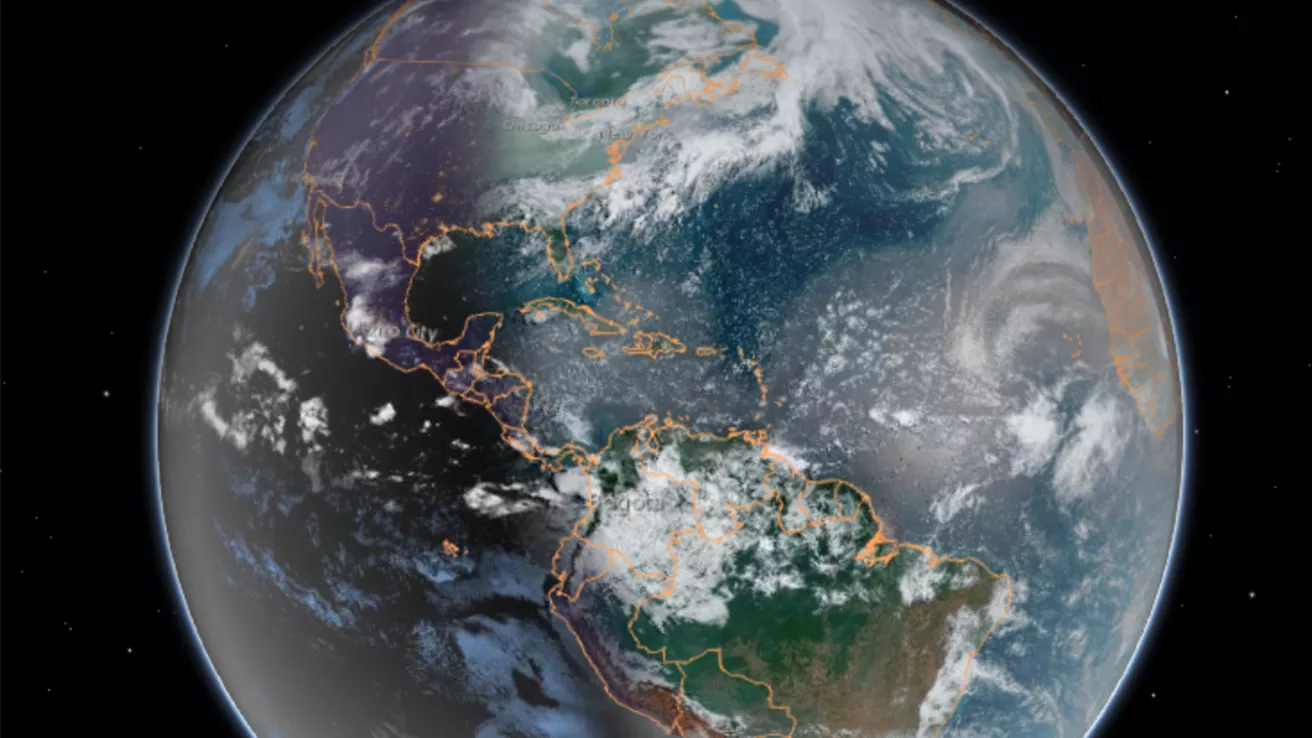
Our dynamic world is always changing. See what it looks like now from space via our live feeds.
Explore interactively Interactive Maps

SWFO-L1 will transmit data to Earth continuously in real-time, protecting vital infrastructure, economic interests, and national security.
Monitoring the sun NOAA's SWFO-L1
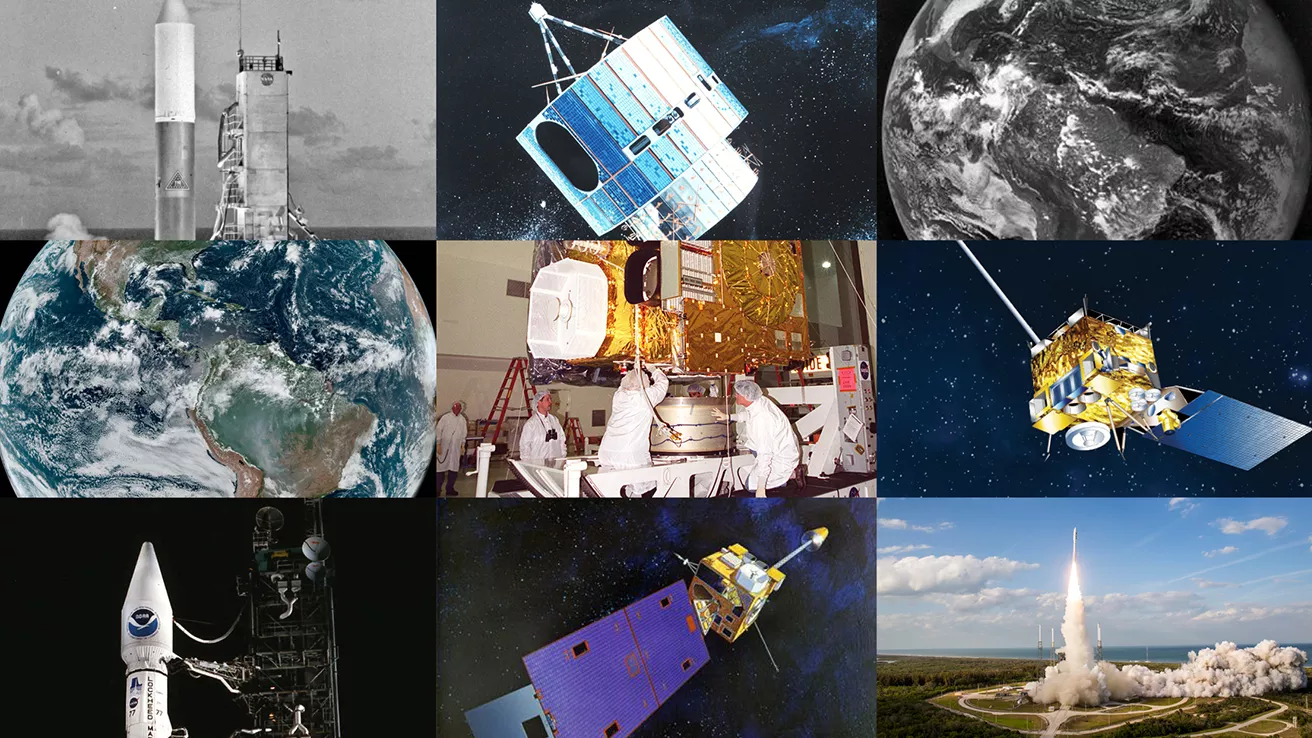
NOAA celebrates 50 years of its heralded Geostationary Operational Environmental Satellite program.
Fifty Years! 50 Years of GOES
Feature Stories
-
Feature Story
On June 25, 2024, GOES-U, the final satellite in NOAA’s GOES-R Series, launched from NASA’s Kennedy… -
Feature Story
For 50 years , NOAA’s Geostationary Operational Environmental Satellites (GOES) have kept a… -
Feature Story
River flooding poses a serious threat to communities across the United States, endangering roughly… -
Feature Story
The overarching term “tropical cyclone” describes powerful storms that form around the world, but…
Data & New Technology
Commercial Data Program
NESDIS assesses and acquires space-based observational weather data from the private sector.
Improving weather forecasts Commercial Data Program
Data Collections
NOAA collects the most up-to-date data about the atmosphere, land, and oceans.
Learn about data information Data Collections
Joint Venture Partnerships
Leveraging new data sources and exploring new and innovative technologies.
Learn about the joint venture partnerships Joint Venture Partnerships
News & Announcements
-
Announcement
NASA, on behalf of the National Oceanic and Atmospheric Administration (NOAA), has awarded a… -
Earth from Orbit
Since Jan. 31, NOAA satellites have been closely monitoring a series of strong atmospheric rivers… -
Satellite Snapshots
On Jan. 22, 2025, NOAA’s GOES East satellite captured imagery of the world’s largest current… -
Earth from Orbit
This week, critical fire weather conditions persisted across coastal Southern California, driven by…