


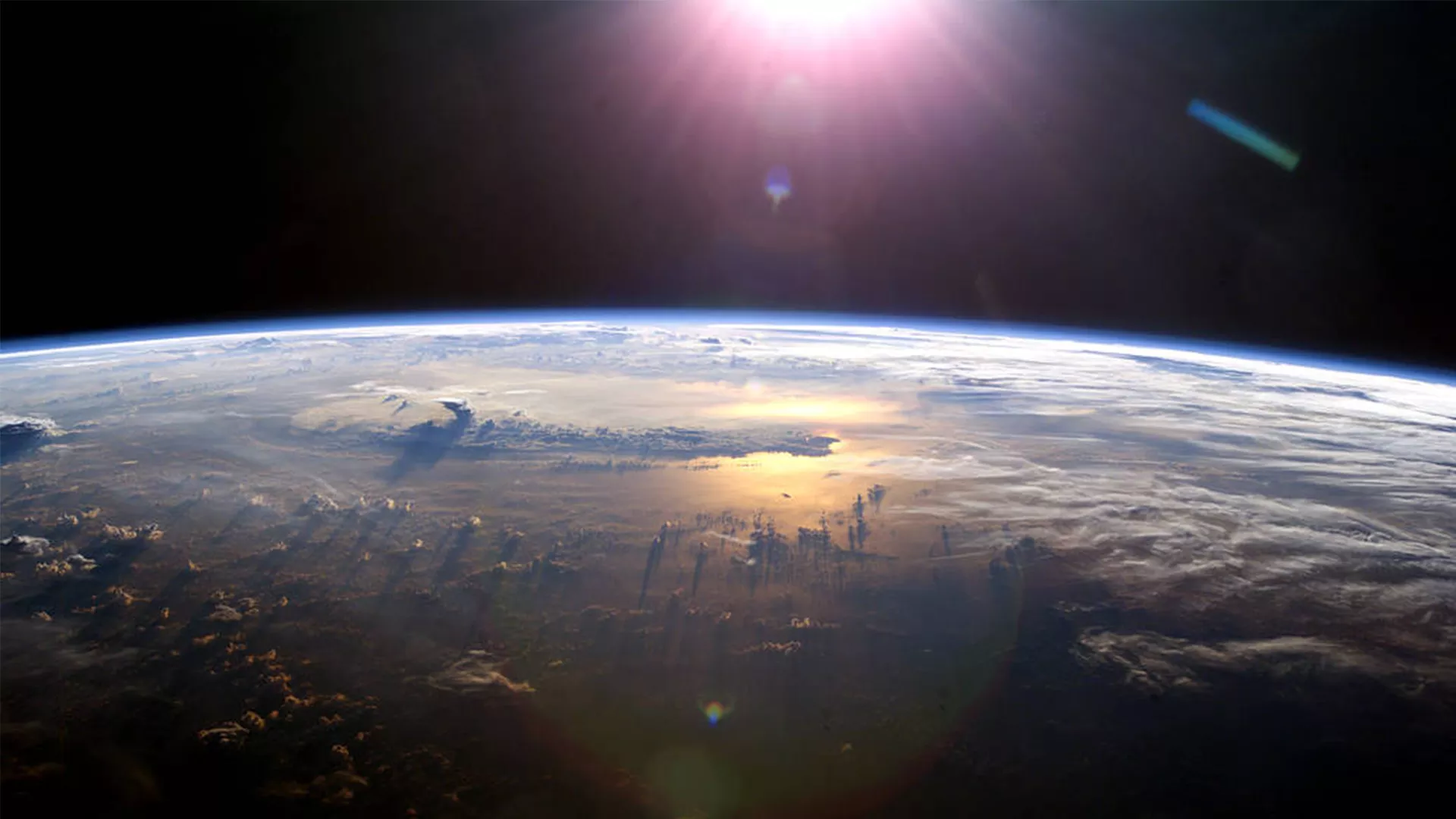
The optical phenomena our satellites observe are often due to the interaction of light from the Sun on our Earth and Ocean, as well as shadows from the Moon.
Common types of Optical Phenomena

Solar Eclipse
During a solar eclipse, the moon moves between the sun and the Earth, causing its shadow to move across the planet.

Changing of the Seasons
Throughout the year, seasons change as different parts of the planet receive more of the sun's rays due to the planet's tilt.

Sunrise and Sunset
We can see the sun rise and set via satellite by watching the solar terminator, the moving line that divides the daylit and dark night side of the planet.

Sunglint
When sunlight is reflected off the Earth's surface at the same angle that the satellite's sensor views it, the effect is known as sunglint.