


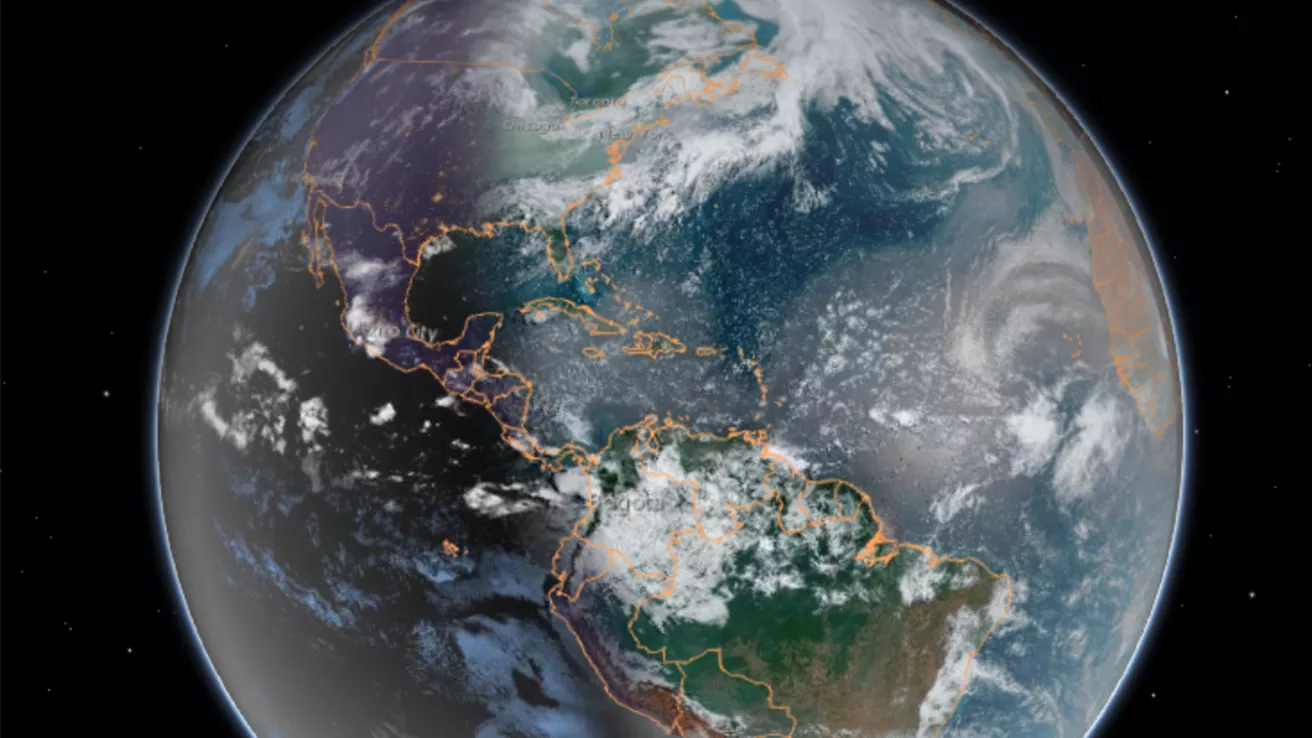
Our dynamic world is always changing. See what it looks like now from space via our live feeds.
Explore interactively Interactive Maps

SWFO-L1 will transmit data to Earth continuously in real-time, protecting vital infrastructure, economic interests, and national security.
Monitoring the sun NOAA's SWFO-L1
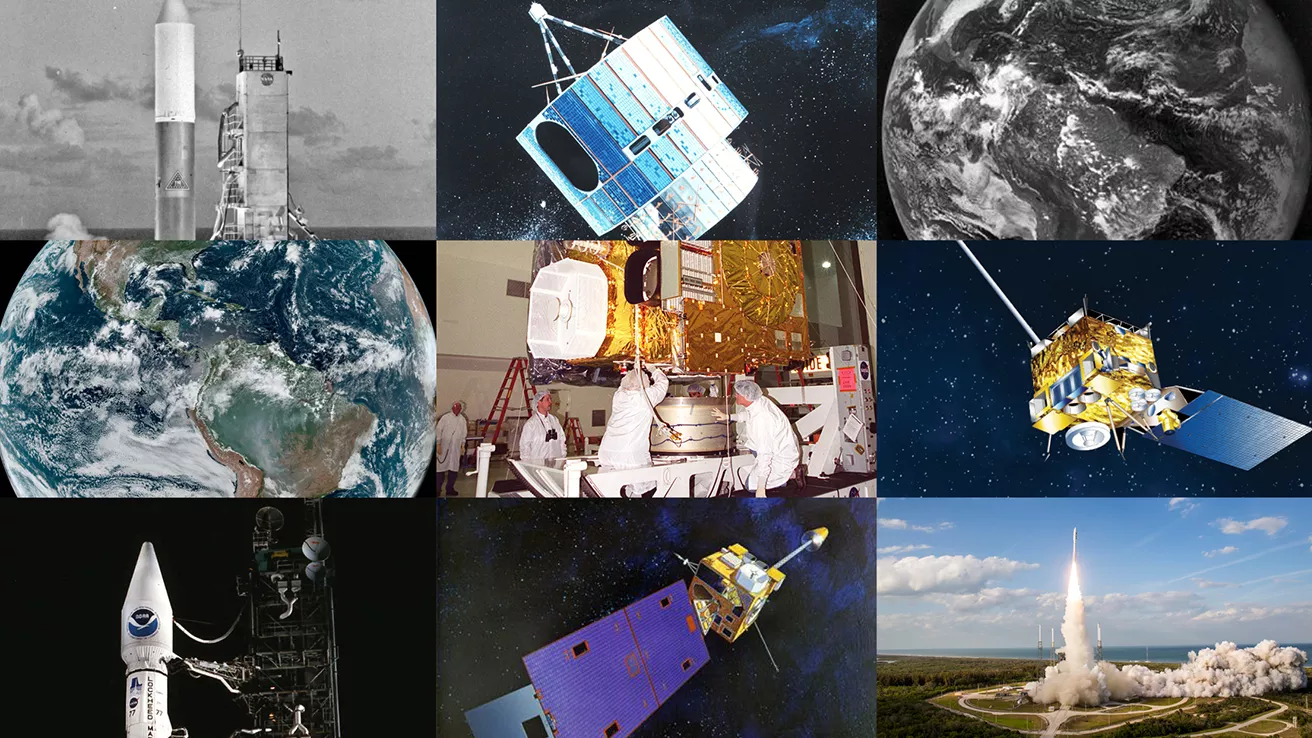
NOAA celebrates 50 years of its heralded Geostationary Operational Environmental Satellite program.
Fifty Years! 50 Years of GOES
Feature Stories
-
Feature Story
The JPSS VIIRS Day/Night Band, with its low-light sensitivity, captures auroras and shows how solar… -
Feature Story
The Johns Hopkins Applied Physics Laboratory (APL) has released the results of the nation’s first… -
Feature Story
Here is a list of some of the most memorable solar events that have affected us here on Earth. -
Feature Story
The March 2025 three-month summaries of temperature and precipitation impacts and outlooks are now…
Data & New Technology
Commercial Data Program
NESDIS assesses and acquires space-based observational weather data from the private sector.
Improving weather forecasts Commercial Data Program
Data Collections
NOAA collects the most up-to-date data about the atmosphere, land, and oceans.
Learn about data information Data Collections
Joint Venture Partnerships
Leveraging new data sources and exploring new and innovative technologies.
Learn about the joint venture partnerships Joint Venture Partnerships
News & Announcements
-
Feature Story
As climate-driven floods intensify, VIIRS provides near real-time data to bolster global… -
Announcement
The Solar Ultraviolet Imager (SUVI) onboard NOAA’s GOES-19 satellite, which launched on June 25,… -
Announcement
NASA, on behalf of NOAA, has selected the University of New Hampshire in Durham to build Solar Wind… -
Announcement
NOAA has shared the first images from the Compact Coronagraph (CCOR-1), a powerful solar telescope…